

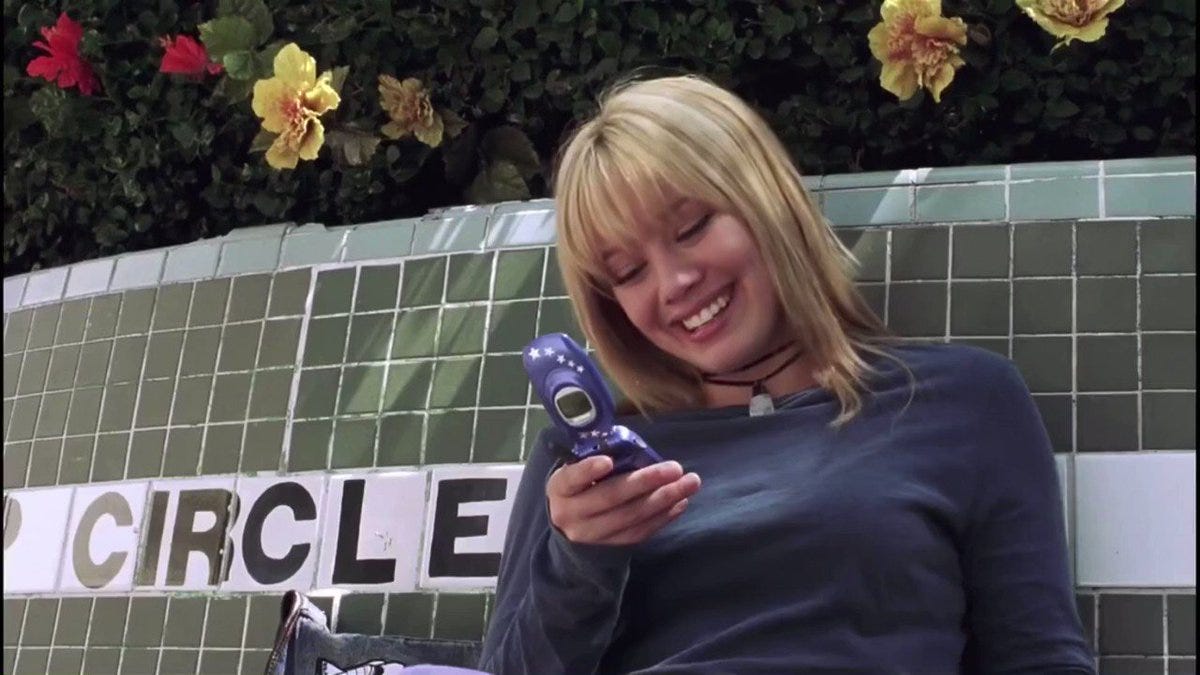
It’s the 90’s in Paris
by which I mean, I am without a phone.
I wanted to write this from the comfort of the Apple Store in Opera while waiting for a genius bar employee to take pity on my iphone-less existence and move my appointment up from Friday to today (Wednesday) but the man at the front door had no sympathy for me and would not allow me to wait in the off chance that someone didn’t show up for their appointment “that won’t happen” (translated).
What he actually said was on est plein plein plein “we are full full full.” He said that three times, once would’ve been enough, and with each plein my jaw clenched tighter. On the walk home I chastised myself for not asking him what his name was and for not being the kind of gay who has Tim Cook on speed dial. Perhaps that’s for the best.
The store is mercilessly without air conditioning—if one assumed American Imperialism would come with comfort, one would be wrong.
But I am not here to belabor French delusions with regard to personal comfort nor their commitment to suffering. I am here to tell you about what was perhaps one of the most insane experiences of my life which resulted in the complete destruction of my iPhone and my subsequent disconnection from the material world for a little more than 48 hours. [Insert applause here.] I’m back to consulting maps and making plans that require strict meeting times with grace periods and second locations in the not so unlikely event that things don’t go as planned.
How did we do this for so long? Were we simply smarter, savvier? Or did we just miss each other and return home to be informed by our answering machines that we were standing on the Northwest corner when we were meant to be on the Southeast?
The Blue Room
The cinema is one block North of Boulevard Saint Denis on Boulevard de Strasbourg, L’Archipel, around the corner from Chez Jeanette for those in the know. I swerve out of the rush hour traffic in the two way bike lane out front to find a place to park my Lime bike. My phone is dying, I should’ve charged it instead of scrolling, I should’ve charged it while I was scrolling.
Cyril is standing by the box office with a collection of friends. He sees me and waves. He thanks me for coming and I explain my mistake a few weeks prior. This is my second attempt at attending a screening of his documentary Les Cahiers Adjani, a diaristic exploration of family and obsession through the lens of the filmmaker’s fixation with the iconic French actress Isabelle Adjani.
The previous screening was presented by MK2 in collaboration with Le Centre Pompidou. When I arrived at the MK2 cinema across the street from the Pompidou in Le Marais mere moments before the screening was set to begin, I was informed by a very sad looking receptionist that although the screening was in fact presented by the Pompidou, the screening was actually taking place at MK2 Bibliotheque.
C’est proche ? (is that close?)
Non.
Cyril understood. Apparently, I wasn’t the only one who made the mistake, vous auriez pu passer une tres bonne soiree ensemble. (the two of you could’ve had a great evening.)
I thought about both of us wandering around in front of MK2, strangers among a throng that throttled me in rush hour pedestrian traffic, a missed connection in the shadow of the large scaffolding of construction on the museum.
Tonight I arrive early, in the right place, a success. I buy a 10 euro ticket and enter the cinema which contains two screening rooms. I walk into the blue room, named for its rows of cobalt blue seats all of which face the door such that one enters a room full of people staring in their direction.
Taylor is rushing to meet me after a five and a half hour zoom marathon of back-to-back meetings during which, I will later learn, she had to mute herself to use the restroom because there was no time between calls.
I choose two seats four rows from the front. I sit one seat in, leaving the aisle for Taylor who makes it seconds after the lights go down and after introductions from the cinema staff, Cyril, and a representative of an Algerian society who are presenting the screening this evening.
The screening ends and Taylor and I share a glance. We are both shocked by how much of the film we actually understood—it was in French without subtitles. The imagery in Cyril’s phenomenal film oscillates between dynamic and mundane, quiet interior moments of a girl with her collection of colored pencil heads, footage of Isabelle Adjani on the Croisette at Cannes, Cyril and his mother lying in his childhood bed listening to stories about life in Algeria. Cyril’s narration is soothing, his voice clear and incisive and funny.
When the moderator asks if there are any questions we look around. Eventually a mic is passed from one person to the next as the audience asks about his process, about Algeria, about Adjani. The man sitting next to me reaches for the mic, he is missing the three middle fingers on his left hand. After he asks his question he stands abruptly and tells me he has an emergency.
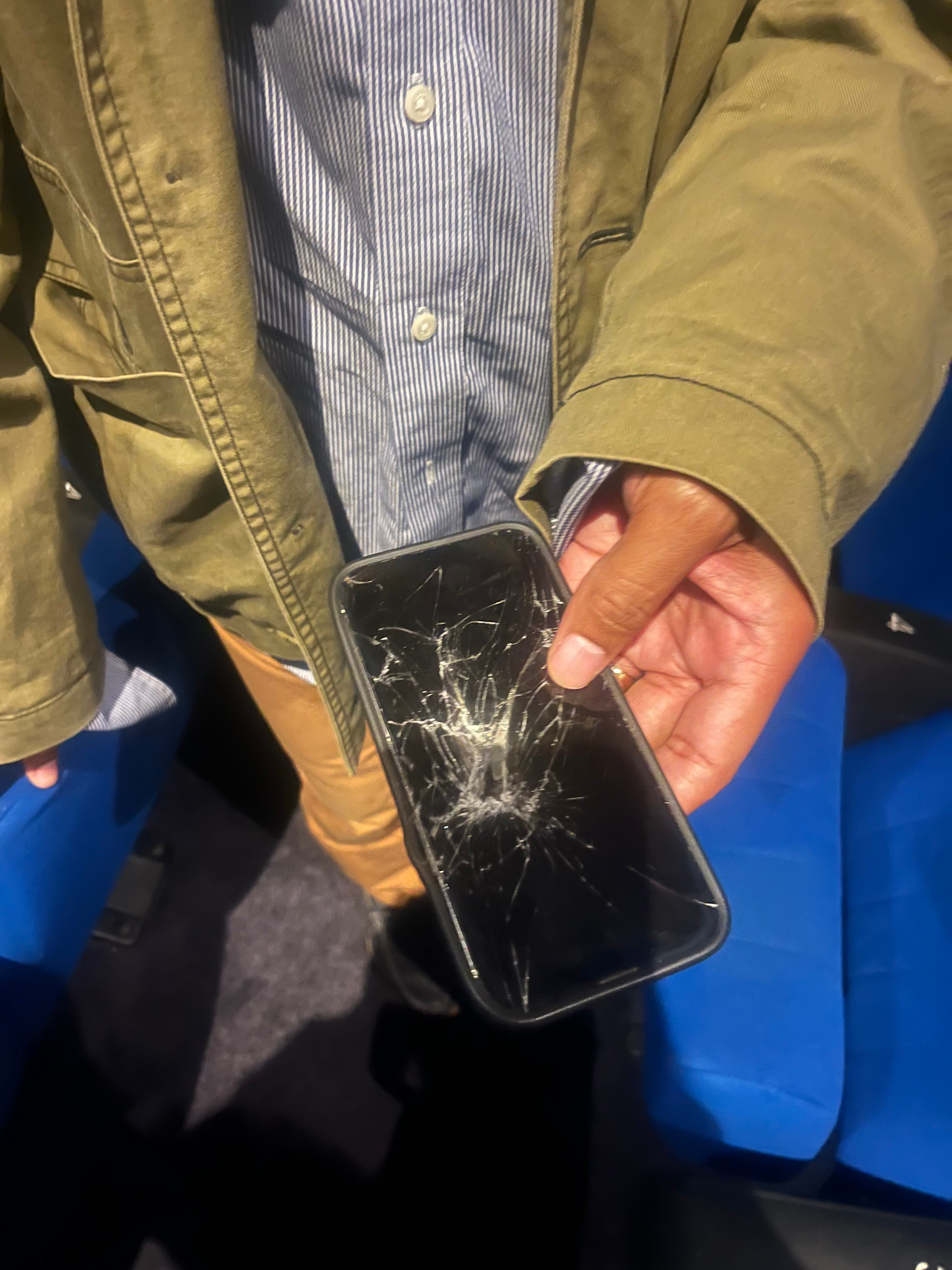
He mutters urgence urgence as he pushes past me, stepping on my foot in the process. When he clears the aisle I notice my phone has fallen off my lap and into the seat. It is stuck in the kind of manner one “couldn’t write” in a script. It has lodged itself in the connection between the seat and the seat back, where a metal piece connects the two sections. A metal piece that is now pressing against the glass on the front of my screen, scraping it with every movement of the chair.
I spend the rest of the Q&A attempting to liberate my phone to no avail. As the theater empties I work the seat up and down, the screen crunching with each movement. Taylor calls an employee. He wonders if he will have to disassemble the seat. Somehow he successfully retrieves the phone which now has a hole in the center of the screen through which one can see the interior of the phone, glass falling everywhere.
We exit, “I need a drink.”
Champs Elysees
I arrive at the metro stop Charles de Gaulle Etoile with the map seared into my mind.
My appointment begins in two minutes and I count the seconds as I navigate the underground labyrinth that traces the roundabout circling Place de l’Etoile above. I am looking for sortie 1 champs elysees at which point, according to the directions provided, I will summit onto a direct view of the Arc de Triomphe. I walk round and around as minutes pass, the escalator is broken, the stairs are packed, when I finally exit I see the Arc de Triomphe but not from the angle I was promised.
I cross the street with a group of American high schoolers on a school trip led by a giant man who could double as the History teacher and football coach. They turn left towards the monument, phones firmly ensconced in front of their faces, the filter through which they experience, potentially for the first time, the Arc de Triomphe. I turn right and a few moments later I arrive under the black flag waving in the wind.
The laissez-faire Californian ethos of the trillion dollar tech giant stands in direct conflict with French culture. There are no lines or clearly marked entrances, one simply arrives to be greeted by a friendly face in a familiar blue shirt with a white apple holding an iPad. Of course I am conditioned to this. How many times have I visited an Apple Store in the last decade and a half? And yet somehow, in my experience, it has always just sort of worked.
However, when that mausoleum to American capitalism is situated on Champs Elysees, one arrives with everyone else, battling with French people who want to be in this part of Paris at 11:30AM on a Thursday even less than I do, dodging all manner of Europeans who are as glued to their phones as I would be if I had one that worked.
Three people cut in front of me while I wait for the man with a ponytail of bleached blonde hair and a single bleached eyebrow to listen to the woman ahead of me. Her brown hair brushes against her back, bare under a summer camisole, and I fixate on the tattoo which stretches between her shoulder blades.
He tells her there is nothing he can do for her. She leaves.
After giving my name I am shuffled through a series of hallways and staircases until I reach the Genius Bar. Where yesterday I wandered through an open expanse of Apple Opera, met with tepid glances and turned backs of anyone in a blue shirt, here at Champs Elysees, I am in abundance. I enter to a chorus of bonjours and I don’t know where to look.
I’m told to sit on a bench to the side and it is at this point that I realize this building is also without air conditioning. My breathing is labored, my brow prickling with sweat, I should not have worn this denim jacket.
A man retrieves me and I follow him to yet another room. “I see you’re here for a cracked screen” he says in French.
I tell him yes and he asks to see the device.
I respond, preparez-vous, emotionellement (prepare yourself, emotionally)
He says he is prepared. When I produce the phone from my pocket he gasps as pieces of the screen fall onto the counter revealing a giant metal plate that is now protruding from one side.
He asks me how this happened and I tell him about the cinema, the blue room, the man with two fingers, and the chair that was ultimately my phone’s demise.
He nods. Apparently this happens all the time.
I’m sitting across from a French man. He is bald and wears glasses and he too has a broken phone, shattered beyond repair. When he is asked what happened he says he dropped it “violently.”
Before she sends him off, she cautions him against taking his new phone into the bathroom. She lists a series of spaces he should avoid, at the end he gestures towards me and adds “the cinema.”
In the atrium below a man leads a course titled Prenez des meillueres photos sur iPhone (take the best photos on your iPhone). His French, garbled by his headset mic, comes through the loudspeaker below and I try to imagine the people who have signed up for this course at the Apple Store on Champs Elysees, who are sitting in this building without air conditioning at 11AM while the Sun beats down, the Arc de Triomphe steps away. Do those students know their image could be sharper? Do they know the core memory they capture could be clearer?
Another employee walks in and shows me his phone asking if a collection of cyrillic letters which he cannot read belong to me. I read the name aloud, Мирослава “Miroslava.” The woman next to me raises her hand.
My genius returns with an iPad.
As he scrolls he makes a series of French noises and faces that are largely unintelligible. Frowns and grunts, sighs, a shake of the head. As it turns out, his news is both good and bad.
Good: my insurance will cover the replacement for no extra charge.
Bad: unfortunately on n’est pas en stock (the phone is not in stock).
He wraps my phone, which I now see has a hole not only in the front but also in the back, through and through if you will, and he prepares a dossier for me to take to my third Apple store in 24 hours. He has notified them of my arrival, they are expecting me.
Ligne 6
There is a point on ligne 6 when the train emerges from a dense series of buildings revealing a breathtaking view of the Eiffel Tower. This moment is captured in countless instagram videos, the kind that find their way to my feed are often young people saying to their mothers (in slightly patronizing tones) “get your phone ready” followed by a gasp and an American ‘wow” when the tower emerges from behind the buildings and gleams in the Parisian sky.
When this moment happens on the way to the Apple Store at Marché Saint-Germain I am surprised to feel a melancholic smile creep across my face.
I feel a smug sense of self importance experiencing this moment without any way of capturing it and a sense of pride that I have worked through what was ultimately withdrawal symptoms. I stressed about navigating public transit but I figured it out and the moments wherein my life is built around the assumption of a working device were brought violently into the light. How will I get a metro ticket without a phone?
The irony of course is that these accomplishments have all been in service of ultimately reconnecting to the grid I am currently pretending I don’t miss. This errand has dominated the past 48 hours, it is all I have done. I am only on this train because it takes me to the metro stop a block away from the store and therefore produces the lowest likelihood that I get lost along the way. But the view is nice.
Bretagne By Way of Saint-Germain
The iPhones displayed on the table next to me are presented alongside their energy scores. They have all received A’s for various versions of the iPhone 17. The sole iPhone 16 has received a B. I’m picking up an iPhone 13 – this model is not on display.
The Apple store at Marché Saint Germain is either air conditioned or better insulated and as my temperature regulates sitting next to other customers on the leather imitation couches arranged in a circle forcing us to look at each other while we wait, a man with a square jaw and a wide smile walks up to me. He says he has been expecting me.
My third and final genius tells me he is from Bretagne. He is the only genius who has spoken to me in English and only after asking if he could use the opportunity to practice. He removes my new device from a bubble wrapped sleeve and while he waits for it to load he shows me photos of all the places I should go in Bretagne. Each swipe reveals a new vista, a cliff overlooking the sea, the place where the boat race starts, a mountain, a beach, a tree and featured somewhere in the frame of each image is him, smiling, looking back at the camera, looking off into the distance. I begin to wonder who is on the other side of the camera.
I tell him I enjoyed a weekend in Saint-Malo last summer and he lights up. I explain I stayed inside the walled city at the end of August and he tells me this is the best time to go, it’s peak season, full of tourists.
I hear myself reply, oui c’etait plein plein plein (yes, it was full full full).
He walks away as I prepare my phone for setup. I open my laptop and start typing. As the new device begins an interminable download of the data from my previous phone, I notice a teenage girl and her mother sitting across from me. The girl snatches the phone from her mother’s hand and snarls, Maman, tu comprends rien! (Mom, you don’t understand anything!)
An hour later I’m still at the store, waiting for the phone to update. He has been helping a black girl from New York who is in town doing an exchange program at the Sorbonne. She tells him she’s from the Upper West Side and he gives her a list of jazz clubs she should visit in Paris. He says he wants to listen to gospel music and he wants to go to the Apollo. He tells her his fiancé is protestant and he is Catholic and I revisit the memory of the photos he just showed me with a new context. She lists her favorite things about the city on request and he replies, “you make me want to go back to New York.”
After she leaves he checks in on me. He asks if everything is downloading successfully from the cloud. I tell him so far so good, jusqu’ici tout va bien, the worst is behind me.
He agrees.
He sees my laptop and asks if I’m working. I tell him I’m writing a piece about the experience, about being forced to disconnect and the unsettling reality of one’s dependence on these devices, how they shape our entire perception of the world around us and the way we interact with the city we live in. I mention the metro example, that I forgot I could simply buy a ticket, as I had done many times before in the decades of coming to Paris without a smartphone. He laughs. He says we should all make a point to disconnect from our phones at least once a year, to reconnect with nature and the world around us, so that we can maintain some sovereignty from our devices.
“That’s the thing about humans,” he says, “we’re always adapting.”
Who knew processing trauma would yield such excellent immersive storytelling? Thank you for your sacrifice. 😅🫶🏾
omg. how long have you been sitting on this gem!?